
State of the provider sector
System reform and planning
Confidence about role in 10-year health plan, multi-neighbourhoods, IHOs and the new FT model
FIGURE 13
To what extent do you feel confident about the following statements:
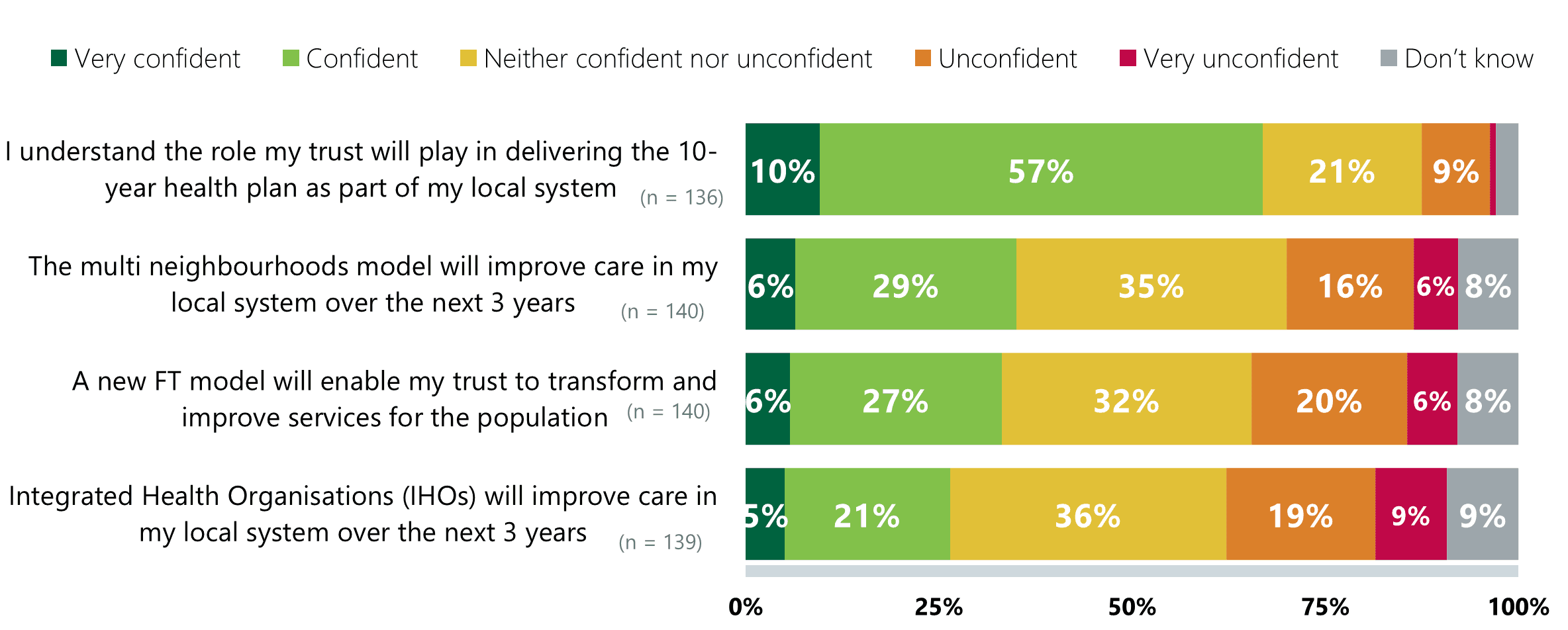
- Two thirds (67%) of respondents were confident that they understood the role their trust will play in the delivering the 10-year health plan as part of their local system.
- Confidence was much lower towards IHOs and the multi-neighbourhood model improving care over the next three years and new FT models improving services (IHOs: 26% confidence, multi-neighbourhood: 35% confidence, new FT model: 33% confidence).
Reforms of NHS national bodies
FIGURE 14
In 2025, the government announced it would be reforming NHS national bodies. It has recently initiated a restructure of DHSC and NHS England to form a joint executive team and regional delivery model, with implications for ICSs.
How concerned are you about the impact of the reforms to NHS national bodies on the delivery of high-quality services in your area?
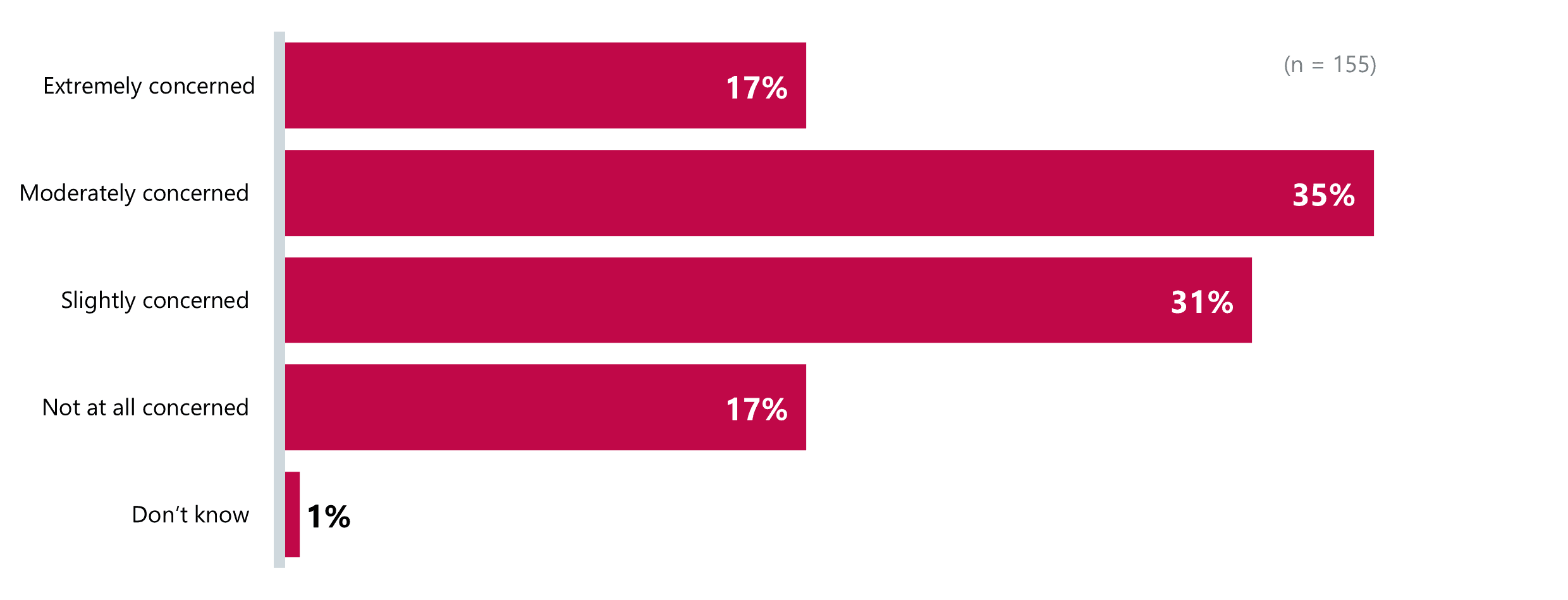
Over half (52%) of respondents were moderately (35%) or extremely (17%) concerned about the impact of the reforms to NHS national bodies on the delivery of high-quality services in their area. 17% were not concerned at all.
Respondents shared concerns around uncertainty over timelines, loss of capacity and expertise, and disruption to leadership and morale. There was some support the principle of streamlining, if delivered effectively.
"…I do not object to the principle of reforming national bodies — there is a strong case for simplification and clearer accountability. My concern is how the reforms are being delivered and the immediate impact on local systems. At a time when demand and pressure are already unprecedented, the process of restructuring risks drawing focus and capacity away from maintaining high-quality services…" Director, mental health / learning disability trust
This level of uncertainty and change at time when we need to perform better than we ever have, as an NHS, to recover core operating standards is very unsettling and morale is low.
League tables
FIGURE 15
To what extent do you agree with the following statement: Our trust’s position in recent NHS performance league tables reflects the organisation’s performance fairly
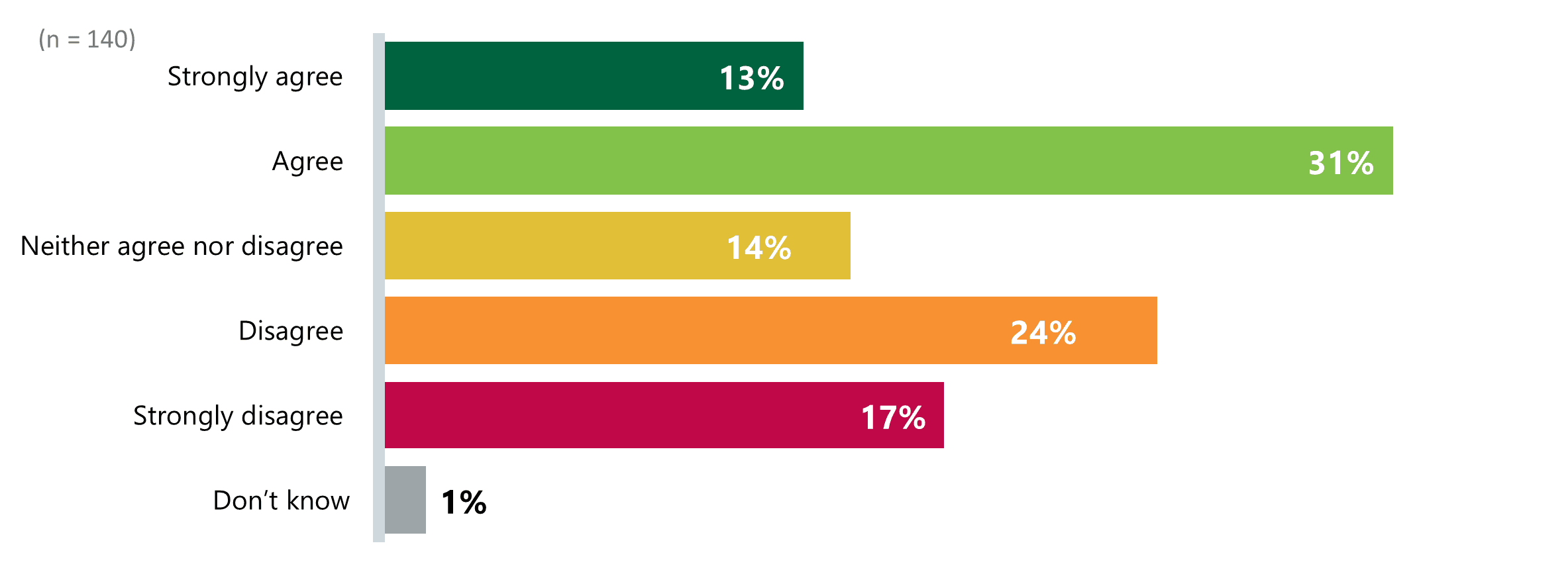
- Responses to this question were relatively evenly split: 44% of respondents felt that their trust’s position in NHS performance league tables reflected their organisation’s performance fairly. A similar proportion 41% disagreed.
- Combined acute and community trusts were far more likely to agree than others that their trust's position in recent NHS performance league tables reflects their organisation's performance fairly.
- Concerns focused on the methodology, with particularly lack of nuance across trust types, a narrow set of measures, and perceived bias toward smaller trusts. There were calls for more contextual and qualitative data to improve understanding.
Measures are blunt and equal rating is ridiculous. Favours specialist and non-complex smaller trusts. The model and what/how it works is not well understood and causing unnecessary noise.
"The position is reflective of where we are against the metrics, but it doesn't help the general public to understand if their health system is good, bad or indifferent. As an individual I want to know whether across the whole pathway what level of service I will receive and the areas that I need to be concerned about." Director, ambulance trust
The financial override to a level 3 feels unfair to punish honesty. Data quality needs investment to ensure apples are compared with apples.
The 10-year health plan: priorities
FIGURE 16
To support the delivery of the 10-year health plan, what three things are you currently prioritising?
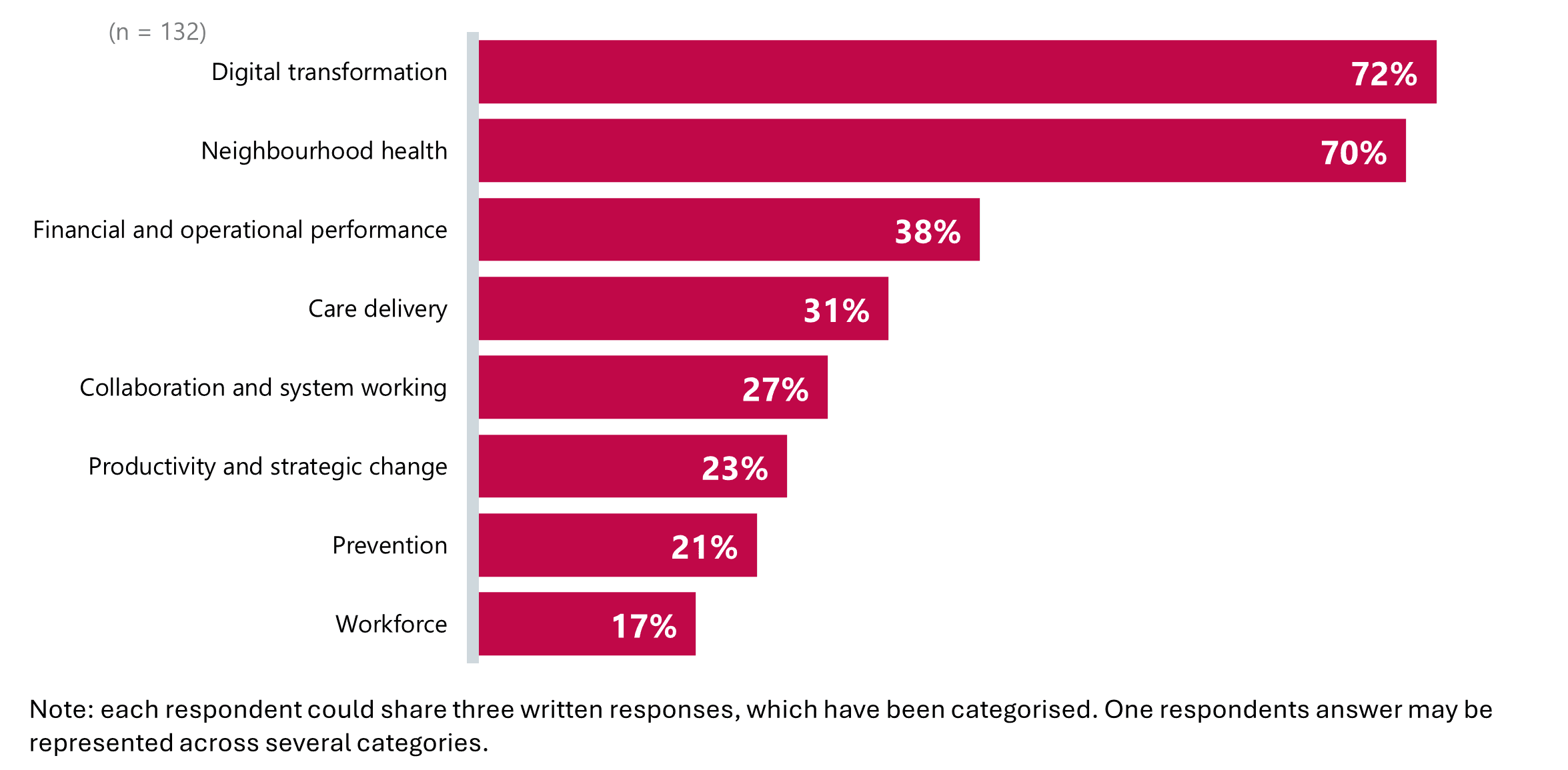
- Digital transformation was the most commonly prioritised area for delivering the NHS 10-year health plan, with 72% of respondents focusing on digital tools such as AI, electronic patient records, and the NHS app.
- Neighbourhood health 70% are prioritising neighbourhood health through community integration and the left shift.
- Financial and operational performance was a priority for 38% of respondents, including efforts to stabilise finances, improve estates, and meet recovery targets.
- Care delivery was highlighted by 31%, with a focus on safe, high-quality care, service redesign, and specific attention to mental health and children’s services.
- Collaboration and system working was cited by 27%, reflecting efforts to strengthen joint working across trusts and within systems.
- Productivity and strategic change was a priority for 23%, with emphasis on efficiency and transformational change.
- Prevention was mentioned by 21%, including population health and reducing health inequalities.
- Workforce was the least mentioned priority (17%), though still recognised as essential in terms of recruitment, retention, morale, and leadership.
The 10-year health plan: concerns
FIGURE 17
What are your three biggest concerns around delivery of the 10-year health plan?
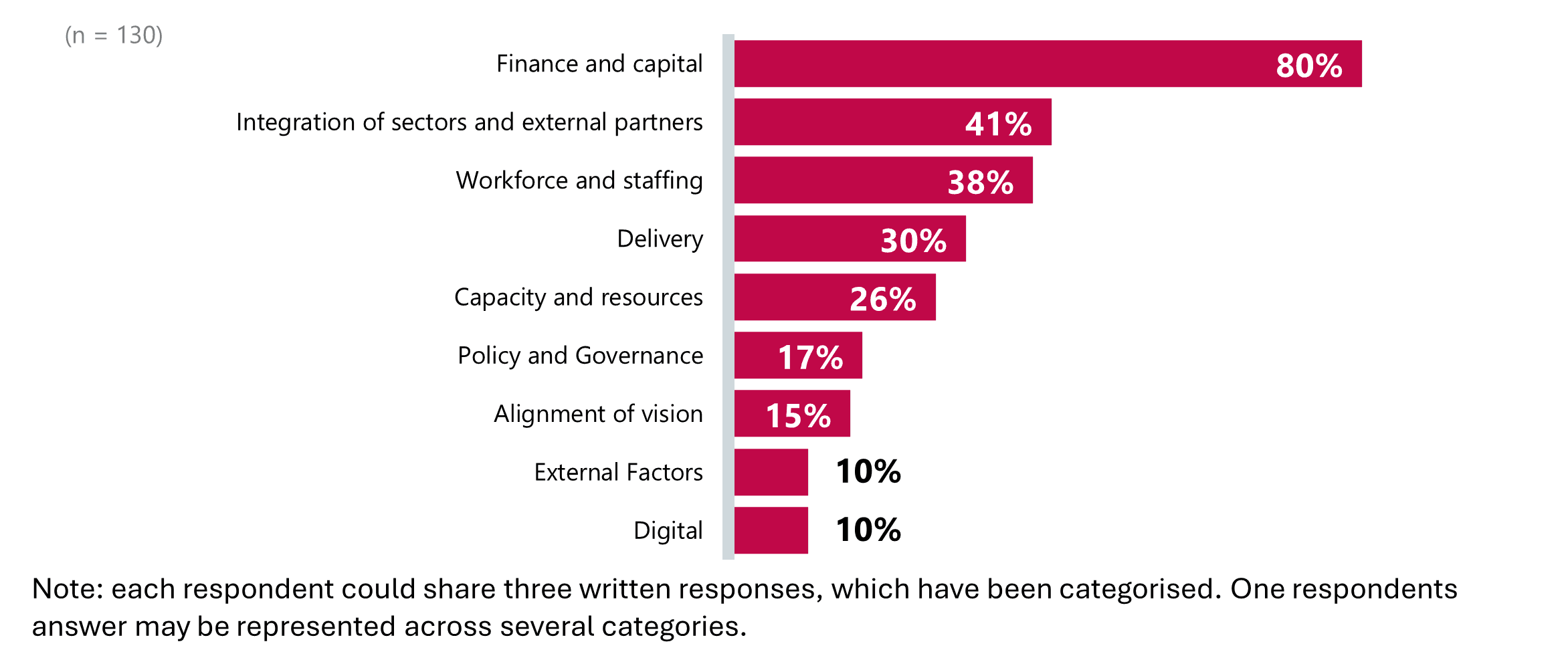
- Finance and capital are the top concerns for delivering the 10-year health plan, cited by 80% of respondents, with worries about short-termism, budget constraints, and a lack of capital investment.
- Integration of sectors and external partners was a major concern for 40%, reflecting challenges in coordinating care across acute, community, mental health, and externally with social care services and local government teams.
- Workforce and staffing was highlighted by 38%, with issues around recruitment, retention, leadership, and culture.
- Delivery of the plan was a concern for 30%, particularly due to unclear implementation details and the scale of change required.
- Capacity and resources was cited by 26%, with respondents noting high demand and limited ability to deliver transformation.
- Less commonly mentioned concerns included policy and governance (17%), alignment of vision and incentives (15%), external factors such as political change and socio-economic conditions (10%), and digital maturity and data availability (10%).
The 10-year health plan: achievements
What is your trust most proud of achieving so far that contributes to the ambitions of the 10-year health plan?
An example of integrated care and collaboration and improved financial and operational performance:
"In mental health - we have invested in the voluntary sector and now collaborate on three key areas: safe havens, crisis houses, and triaging referrals together within our community mental health framework.
Acute - community investment in totalling a six-figure sum, returned greater savings and costs and reduced bed usage significantly." [some details removed to reduce risk of identification] Chair, mental health/learning disability trust
"Actively engaged in determining a range of collaborative improvements with a neighbouring trust - already reduced to almost nothing our Out of Area Placements, producing eight-figure savings to be used in transforming community services." [some details removed to reduce risk of identification] Chair, mental health/learning disability trust
Examples of integrated care and collaboration, digital transformation and neighbourhood health:
"Our virtual health hub which provides immediate secondary care support to care homes, paramedics, GPs and community teams. Keeping people safe at home. It has been transformational…" Chief executive, acute trust
"Our early adopters of neighbourhood health are using AI to risk stratify and are already able to show a reduction in non-elective (NEL) for frailty." Chief executive, combined mental health and community trust
Several examples of operational expansion leading to improvements in waiting lists and patient care:
"…Establishment of a Community Diagnostic Centre (CDC), which has increased local access to tests and scans, supporting earlier diagnosis and easing pressure on acute hospital sites.
Introduction of robotic-assisted surgery, bringing state-of-the-art technology that improves surgical precision, shortens recovery times and enhances patient experience…"[some details removed to reduce risk of identification] Chief executive, acute trust
An example of workforce development in support of neighbourhood health:
"…We have recruited a number of students across multiple healthcare professions including adult and mental health nursing, physiotherapy and occupational therapy. The students will have placements in local settings such as GP practices, community trusts and social care teams with the aim to place them as third year students in Integrated Neighbourhood…The project benefits both students and local residents, supports NHS, social care and council partners and is expected to improve workforce readiness, strengthen partnerships and provide evidence for wider adoption in line with the NHS 10-year health plan and three Darzi shifts." [some details removed to reduce risk of identification] Director, acute trust