
State of the provider sector
Operational performance and resilience: this winter and beyond
Quality of healthcare provided by your local area now and in the future
FIGURE 1
How would you rate the quality of healthcare provided by your local area now and in the future?
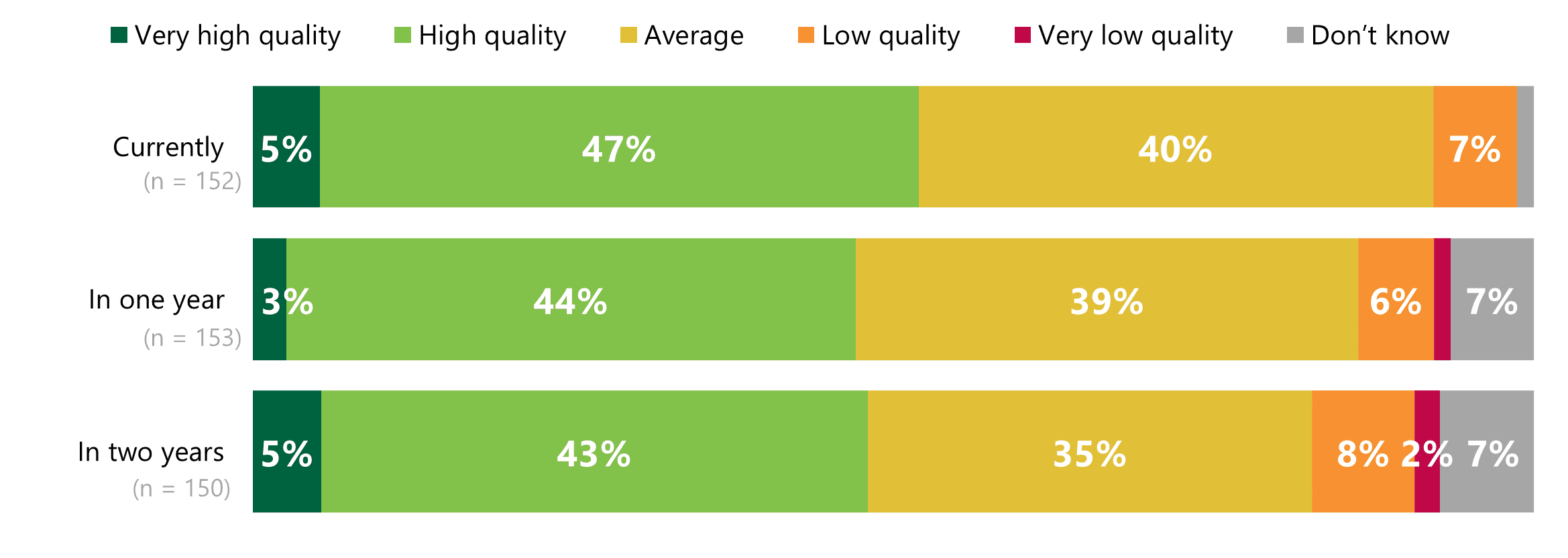
- 52% of trust leaders rated the current quality of healthcare as very high (5%) or high (47%). This figure has increased from 41% last year and 47% in 2019, before the pandemic.
- 47% of trust leaders predicted that the quality of healthcare provided by their local area would be very high (3%) or high (44%) in one year, up from 33% last year.
- Almost half (48%) of trust leaders felt that the quality of healthcare provided by their local area in the coming two years would be very high (5%) or high (43%), up from 35% last year.
- Leaders from mental health and learning disability trusts were less likely than others to rate care as high-quality now or in the future.
If we keep cutting services every year, I am fearful of what the NHS will look like in 5 or 10 years time. Sometimes we need to 'invest to save' e.g. spending on digital solutions will cost more but speed up processes in the long run.
"A high quality service is provided to patients once they get seen. The problem is the waiting times for virtually everything: diagnostics, waiting for social care, waiting in ED, waiting for a bed to become available for an un-planned admission, a huge backlog of out-patient follow-ups, and waiting times for routine surgery and first out-patient appointments." Chair, combined acute and community trust
Confidence around trusts' capacity to meet demand for services
FIGURE 2
Over the next 12 months, how confident are you that your trust has the capacity to meet demand for services?
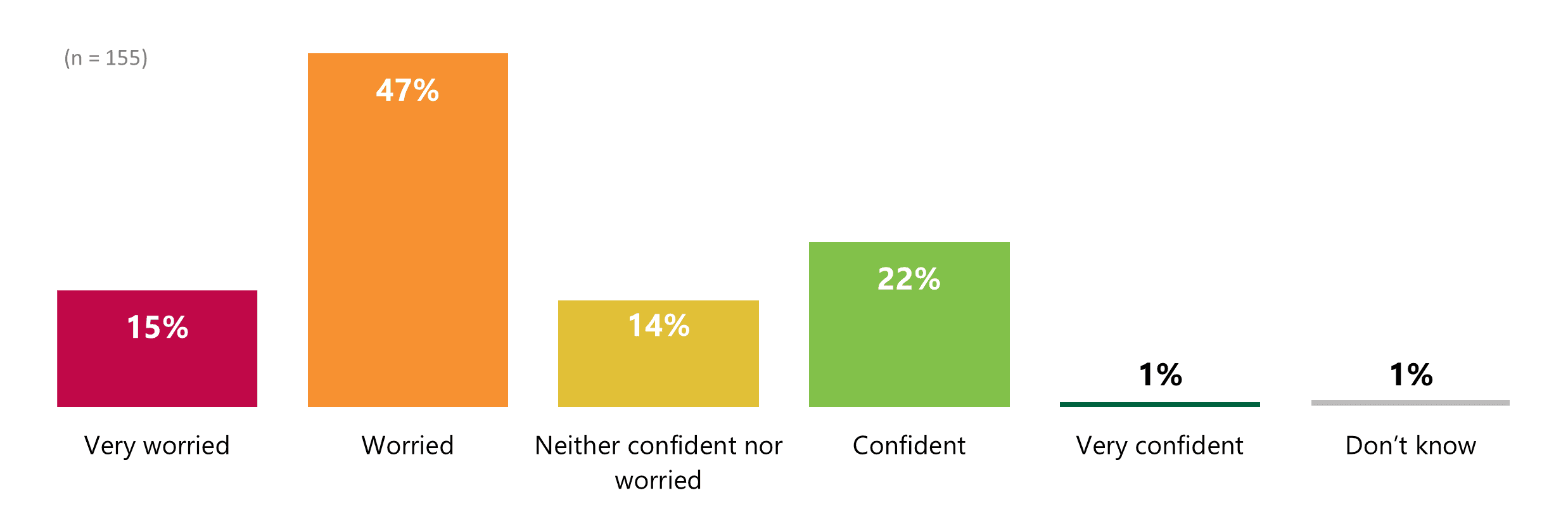
- 63% of trust leaders worried about whether their trust has the capacity to meet demand for services over the next 12 months, down from last year (79%) but slightly higher than before the pandemic (61% in 2019).
- Those who were not confident about meeting their financial plan were much more worried than average that their trust has capacity to meet demand for services over the next 12 months.
- In the comments, respondents raised concerns about specific specialist services, with some highlighting rising demand in mental health provision. Many noted that demand is increasing faster than capacity, putting additional strain on already stretched systems. Others cited rising waiting lists, workforce shortages, and lack of long-term planning, with several pointing to disruption within ICBs. While productivity initiatives are underway in some trusts, there remains caution about their effectiveness given financial pressures, low staff morale, and an evolving system landscape.
"The Trust is implementing productivity initiatives such as virtual wards, discharge improvements and digital upgrades but I remain cautious due to risks remaining in terms of workforce morale and staffing gaps, financial constraints and seasonal pressures and continued rising demand. It requires more system wide collaboration and continued support from NHSE." Director, acute trust
This is difficult to answer as it varies by service. For inpatient mental health services, ADHD and CAMHS we are very challenged. For other services there is typically greater confidence to meet demand.
Mental health services in your trust and system
FIGURE 3
To what extent do you agree with the following statements about mental health services in your trust and local system?
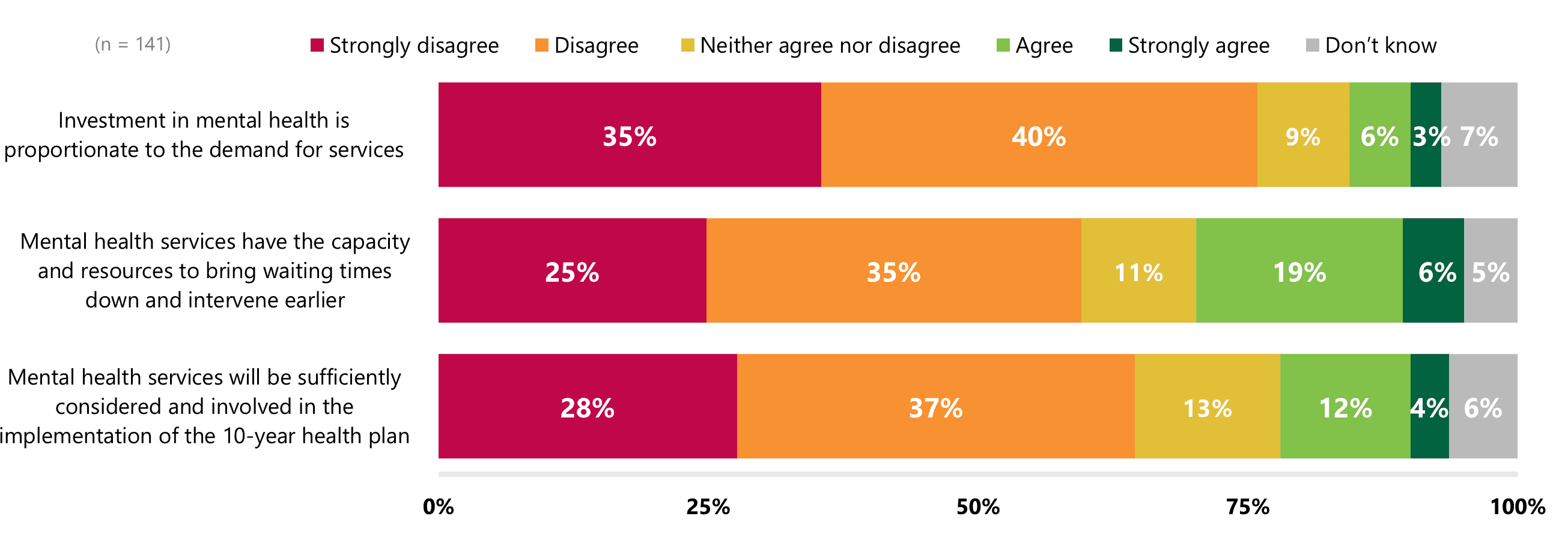
- Only 9% of those surveyed agreed that investment in mental health is proportionate to the demand for services, while three quarters (76%) disagree.
- 16% of respondents agreed that mental health services will be sufficiently considered and involved in the implementation of the 10-year health plan.
- A quarter (25%) agreed that mental health services have the capacity and resources to bring waiting times down and intervene earlier.
- In the comments, respondents expressed concern about the state of mental health services, covering a lack of investment, parity of esteem, limited understanding of scope and complexity and neurodiversity needs.
"Mental health services remain under significant pressure with demand outpacing investment and capacity, while there are efforts to integrate mental health into broader strategic planning, concerns persist about whether these services will receive prioritisation and the resources needed to meet any future goals." Director, acute trust
Unfortunately the wording of the 10 year health plan is such (in my opinion) that it does not come across strongly enough as a significant priority. There is even less mention of learning disabilities, autism and ADHD.
Concerns about seasonal pressures over winter
FIGURE 4
How concerned are you about the impact of seasonal pressures over winter on your trust and system(s)?
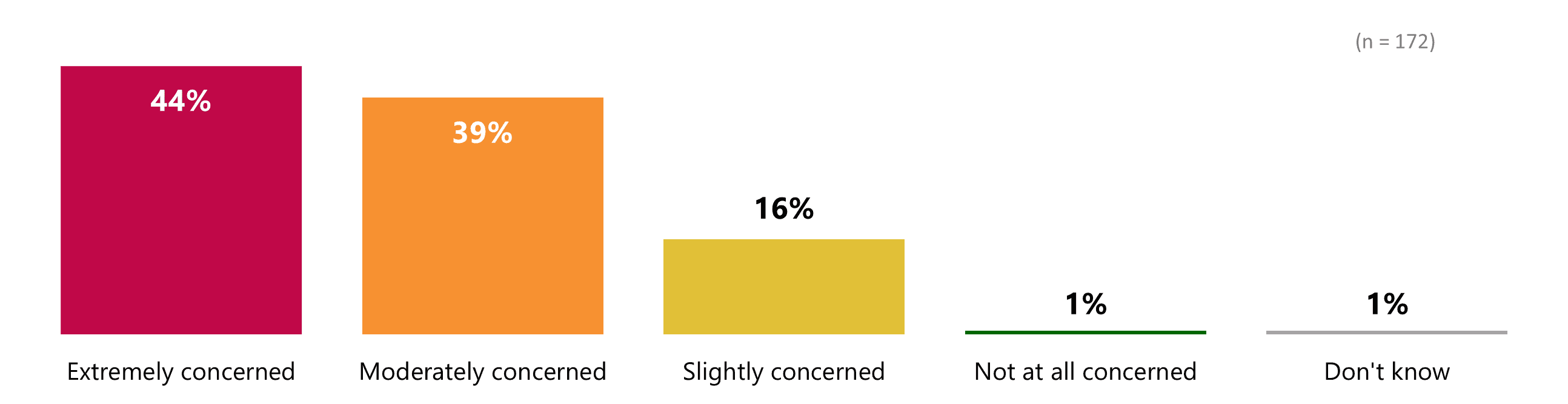
- 83% of trust leaders said they were extremely (44%) or moderately concerned (39%) about the impact of seasonal pressures over winter, down from 96% last year.
- The proportion of acute trusts expressing extreme concern about seasonal pressures over winter was markedly higher than the average across the survey.
- Respondents raised concerns about the upcoming winter period, citing a combination of systemic, financial, capacity, and workforce pressures.
"Winter pressures pose a serious risk to the Trust and the wider system. Demand surges from seasonal illnesses, staff fatigue, delayed discharges, and stretched community services all contribute to heightened safety and operational risks. Despite proactive measures like virtual wards and urgent response teams, systemic fragility remains. Strategic mitigation through integrated planning, workforce support, and discharge coordination is essential to maintain patient safety and service resilience." Director, acute trust
We go into the winter with less resilience than in previous years. We have been holding posts and delaying recruitment and the financial pressures have been impacting on morale. This is not a good start point for the winter.
Seasonal peaks in demand have become less discernible in our mental health services in the post-pandemic era, though pressures will come from increased sickness over winter which impact on patient flow.
Winter compared to previous years
FIGURE 5
To what extent do you agree with the following statements?
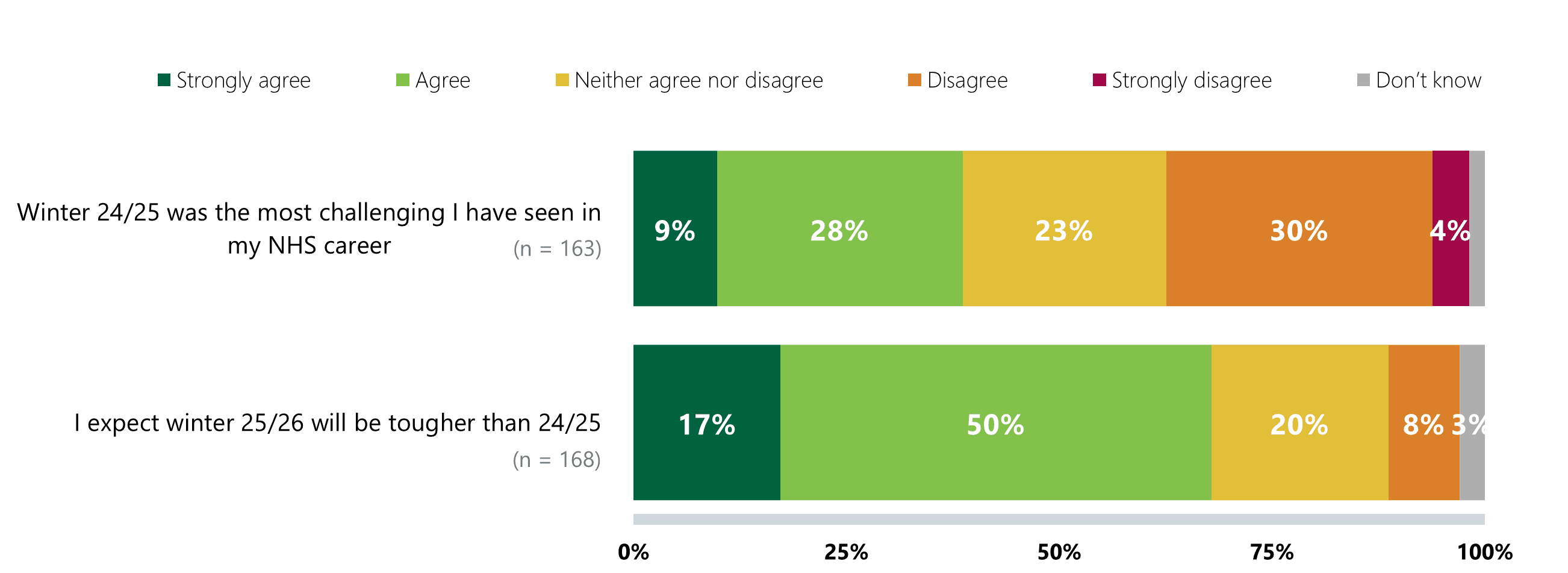
- 37% of respondents strongly agreed (9%) or agreed (28%) that last winter was the most challenging of their NHS career, down from 41% last year.
- 67% expect winter 2025/26 will be tougher than 2024/25, fewer than last year when 82% strongly felt the upcoming winter would be tougher than the previous winter.
- Concerns shared include rising demand, higher patient acuity, severe financial constraints, and persistent workforce pressures as major concerns, alongside systemic flow issues and limited capacity for long-term solutions.
"The convergence of high seasonal illness rates, workforce exhaustion, and system-wide flow issues created a perfect storm. It wasn’t just operational, it was existential. The resilience of staff and the adaptability of the system were tested like never before. If this winter taught us anything, it’s that winter planning must now be year-round, and that risk management must evolve from reactive to predictive." Director, acute trust
"ED performance and urgent care pathway challenges through the first part of the year are evident in our performance figures, Winter demand and acuity will only increase this challenge. This will most likely impact upon RTT, which we know is a political priority. Difficult to see how we can hit all the targets at once." Director, acute trust
National standards
FIGURE 6
Thinking about the next five years, how likely do you think it is that the NHS will meet each of the following national standards?
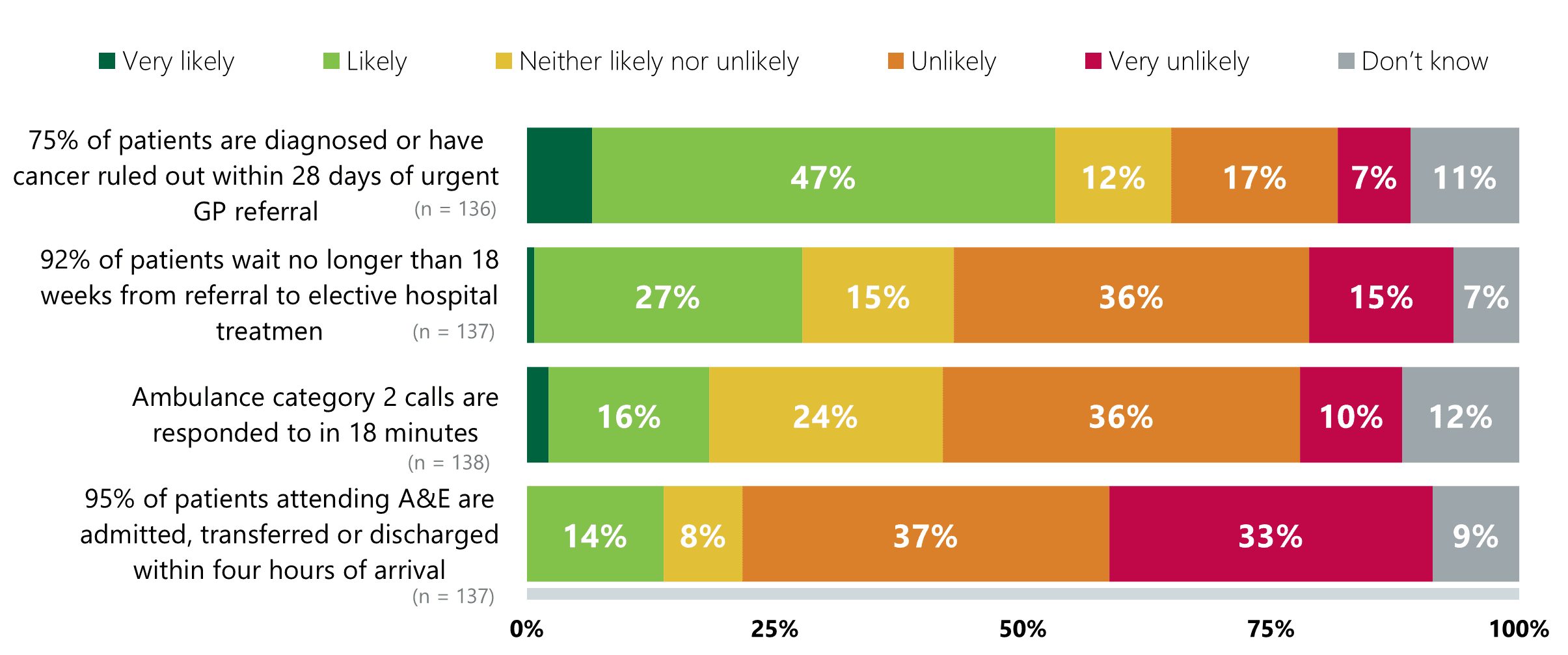
- 53% of those surveyed felt that it was likely that 75% of patients are diagnosed or have cancer ruled out within 28 days of urgent GP referral in the next five years.
- 70% of those surveyed felt it was unlikely that 95% of patients attending A&E are admitted, transferred or discharged within four hours of arrival in the next five years.
- Around half of respondents felt that it was unlikely that 92% of patients wait no longer than 18 weeks from referral to elective hospital treatment or that ambulance category 2 calls are responded to in 18 minutes in the next five years (50% and 46% unlikely, respectively).
- Comments cite rising demand and funding cuts as key barriers, with calls for target reform and investment to enable progress.
Demand escalating in a way that makes these unlikely without further investment/reform.
Would like to see a focus on waiting times in community services in the national standards - the focus on elective hospital treatment is far too narrow and reinforces the acute model of healthcare delivery.
Assuming we make some big shifts in pathways and use of digital and that funding continues for elective recovery and that social care model is funded - it is possible.