NHS Activity Tracker: October 2025
Acute sector
75%
of patients seen in A&E within four-hours in September
7.41m
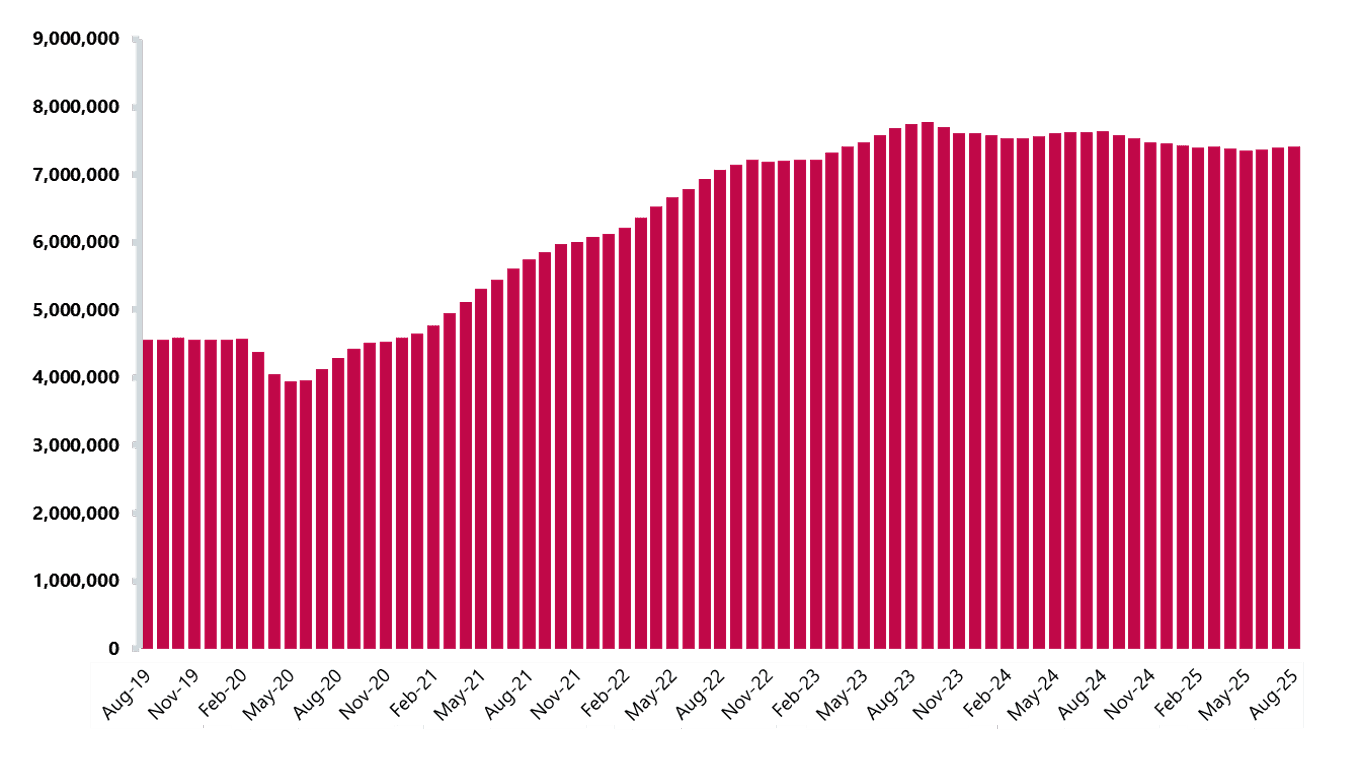
cases on the elective waiting list in August
2.37m
diagnostic tests carried out in August
Accident & Emergency (A&E) (September 2025)
A&E attendances
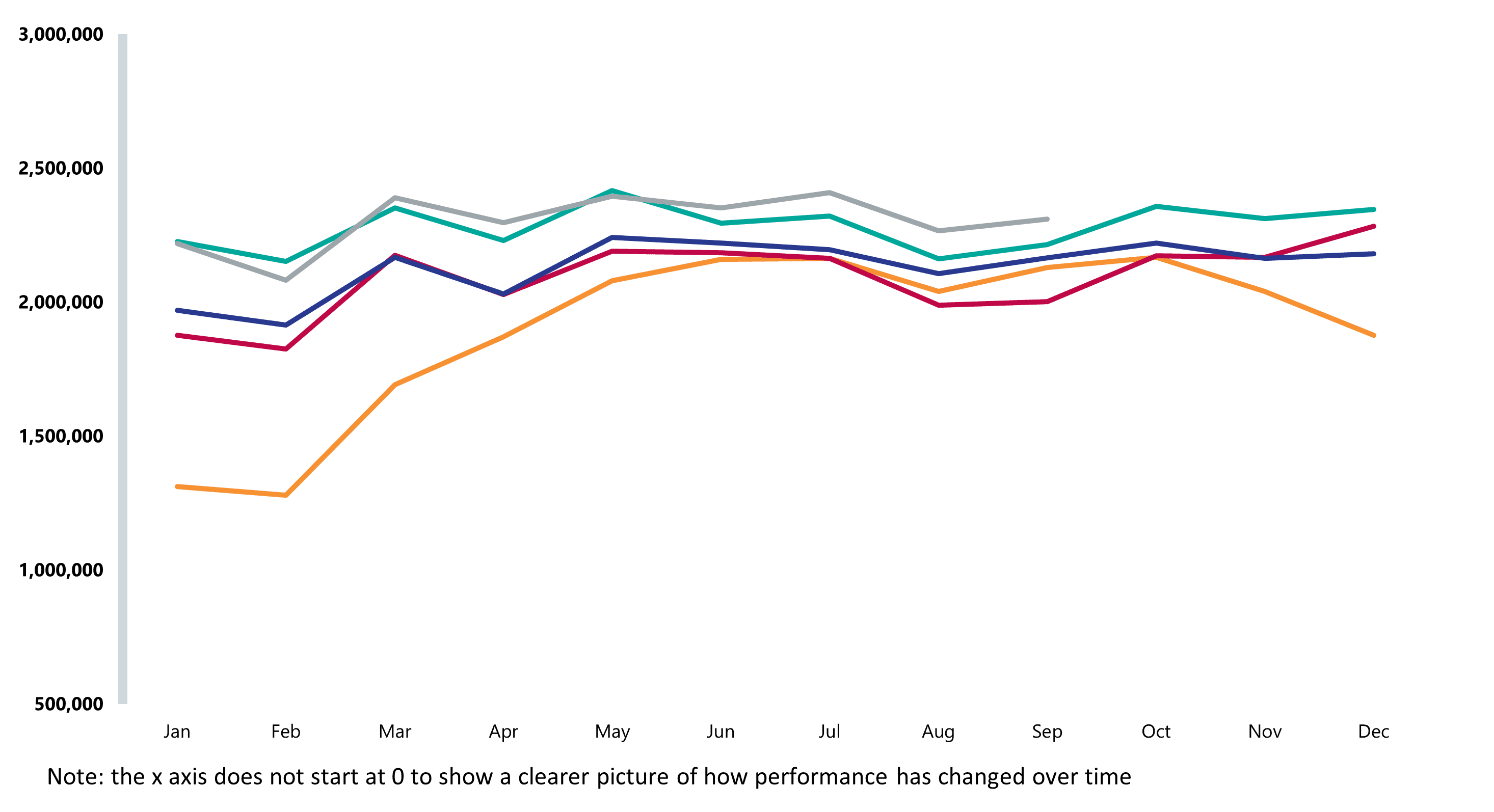
- There were 2.31 million A&E attendances this month, the highest September on record, up by 4.3% compared to last year.
- Three-quarters (75%) of patients were seen within four hours. Performance was above last year (74.2%) but is below the performance aim of 78% set out in UEC delivery plan for winter.
A&E emergency admissions
- There were 535,610 emergency admissions in September, 0.9% higher than last year.
12-hour waits in A&E from decision to admit to admission
- In September, 44,770 patients waited at least 12 hours from the decision to admit to admission, a 25% increase compared to last month and up 15% compared to last year. This is second consecutive month the figure has increased.
12 hours in an emergency department (ED) from arrival
- 133,680 patients waited more than 12 hours from arrival at A&E in September, 2% fewer than last year. This figure remains below the high of over 176,000 seen in January but highlights that too many patients are facing long delays.
- The UEC delivery plan outlines an aim for fewer than 10% of patients waiting over 12 hours in A&E over winter. Waits of over 12 hours occur 9.8% of the time currently, but based on performance in previous years, this will be challenging to maintain over winter.
FIGURE 1
Total number of A&E attendances
Acute discharge delays (September 2025)
- The proportion of patients remaining in hospital at the end of each day despite no longer meeting the criteria to reside was 56.6%, the same as last month but higher than last year (55.7%).
Cancer (August 2025)
- Monthly activity across the 28-day faster diagnosis standard and 62-day pathway was higher than last year but dipped back slightly on the 31-day pathway.
- In August, 74.6% of patients with an urgent referral were told they have cancer, or it was excluded within 28 days. This is down slightly from last year (75.5%).
- 69.1% of referrals met the 62-day standard in August, a slightly lower than last year (69.2%).
- This summer (June, July, August combined) saw the greatest activity on record across all three pathways (28 FDS, 31-day, 62-day). Performance across all three pathways was also the strongest on record this summer.
Diagnostics (August 2025)
- In August 2025, 2.37 million diagnostic tests were carried out - the highest August figure on record.
- Over the summer months (June, July, August combined), 7.48 million diagnostic tests were carried out, the highest of any summer period on record.
- The waiting list fell for the second consecutive month in August, down by 73,300 to 1.66 million, but remains 6% higher than last year. It is now 66% higher than in August before the pandemic, highlighting ongoing pressure on diagnostic services.
- In August 2025, 76% of patients were seen within six weeks for diagnostic tests, which is the weakest performance in 19 months (since January 2024). Generally, performance been moving further away from the 99% constitutional standard since the start of this year.
Elective waiting list (August 2025)
- The size of the waiting list increased slightly (by 12,000 cases) for the second month running to 7.41 million in August. This is 3% smaller than last year but remains significantly elevated compared to before the pandemic (63% larger than August 2019).
- In August, 84.4% of patients on the waiting list were unique patients. This is an estimated 6.26 million people.
- The number of treatments waiting more than 18 weeks was 2.89 million, falling by 9.3% compared to last year. Waits over 18 weeks are equivalent to 61% of all waits, with progress needed to meet the planning guidance sets aim for 65% of treatments to be waiting no longer than 18 weeks by March 2026.
- Waits of over 52 weeks (191,490) are down by 32% compared to last August and total 2.6% of all waits. The planning guidance sets out an aim for waits over a year to account for 1% of all waits by March 2026.
FIGURE 2
Total size of the elective care waiting list