NHS Activity Tracker: November 2025
Acute sector
2.4m
A&E attendances in October
21%
Increase in patients waiting +12 hours to be admitted from A&E in October
1.85m
Cases added to the planned care waiting list in September
Accident & Emergency (A&E) (October 2025)
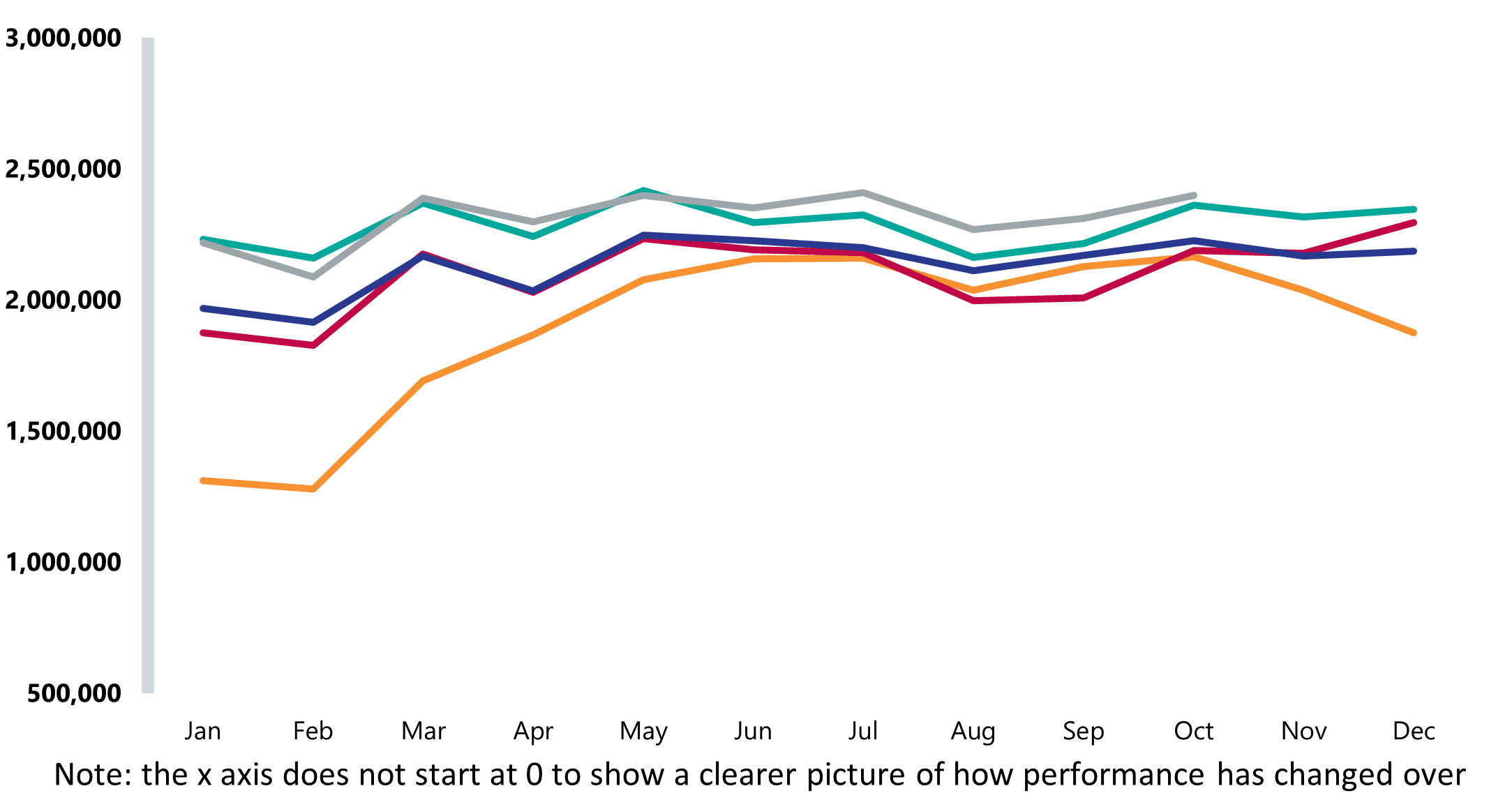
A&E attendances
- There were 2.4 million A&E attendances this month, the highest October figure on record (up by 2% compared to last year) and the third highest number of attendances since the series began.
- Just under three-quarters (74.1%) of patients were seen within four hours. Performance was above last year (73%). Performance needs to increase across the second half of 2025/26 to meet the 78% aim set for March 2026 in the 2025/26 planning guidance.
- New, experimental data was published this month on the performance of paediatric and adolescent attendances and mental health attendances lasting over 24 hours. We will continue monitor these figures, but we advise they are used with caution, as NHSE make clear they have not performed data quality checks on the data.
o There were 4,008 mental health-related attendances that lasted over 24 hours, 9% of all attendances for mental health in type 1 and 2 A&E departments and 0.3% of all attendances.
o There were 452,670 paediatric and adolescent attendances in October, 88% of these were seen within four hours. October’s medium-term planning guidance calls for this to return to 95% in the coming months.
A&E emergency admissions
- There were 554,190 emergency admissions in October, 2% fewer than last year.
12-hour waits in A&E from decision to admit to admission
- In October, 54,310 patients waited at least 12 hours from the decision to admit to admission, a concerning 21% increase compared to last month as we enter winter. Long waits are up 9% on last year.
12 hours in an emergency department (ED) from arrival
- 164,880 patients waited more than 12 hours from arrival at A&E in October, 2% fewer than last year. This figure has been increasing since July and highlights that too many patients are facing long delays.
- As winter approaches, waits of over 12 hours in A&E occur 10.8% of the time, falling short of the 10% aim outlines in the UEC delivery plan published in June.
FIGURE 1
Total number of A&E attendances
Acute discharge delays (October 2025)
- The proportion of patients remaining in hospital at the end of each day despite no longer meeting the criteria to reside was 56.5%. This figure is higher than last year and reflects significant pressures on patient flow, a particular concern for trust leaders as winter approaches.
Cancer (September 2025)
- September saw the second highest monthly activity on record across the 28-day faster diagnosis standard, 62-day pathway, and the 31-day pathway.
- Despite this high activity, performance slipped to 73.9% on the 28-day faster pathway from 75% last September. There were slight improvements in performance on the 62-day pathway (67.9%), and the 31-day pathway (91.2%) compared to last year.
- At the halfway mark in the 2025/26 financial year, the latest figures are a considerable distance from the March 2026 aims set out in the 2025/26 planning guidance (28 FDS: 80%, 62-day: 75%).
Diagnostics (September 2025)
- 2.52 million diagnostic tests were carried out this month, the highest September figure on record.
- The waiting list rose to the third highest figure on record (1.72 million), up by nearly 130,000 since last year. It is now 68% higher than in September before the pandemic, highlighting ongoing pressure on diagnostic services.
- 77% of patients were seen within six weeks for diagnostic tests, a slight uptick from last month, but performance has generally been moving away from the 99% constitutional standard since the start of this year.
Elective waiting list (September 2025)
- The size of the waiting list decreased slightly (by 16,000 cases) to 7.39 million in September. This is 182,000 fewer cases than last year but the list remains significantly elevated compared to before the pandemic (2.82 million more cases than in September 2019).
- In September, 84.4% of patients on the waiting list were unique patients. This is an estimated 6.24 million people.
- The number of cases waiting more than 18 weeks was 2.82 million in September, falling by over 300,000 compared to last year. Waits over 18 weeks are equivalent to 61.8% of all waits, with progress needed to meet the planning guidance sets aim for 65% of treatments to be waiting no longer than 18 weeks by March 2026.
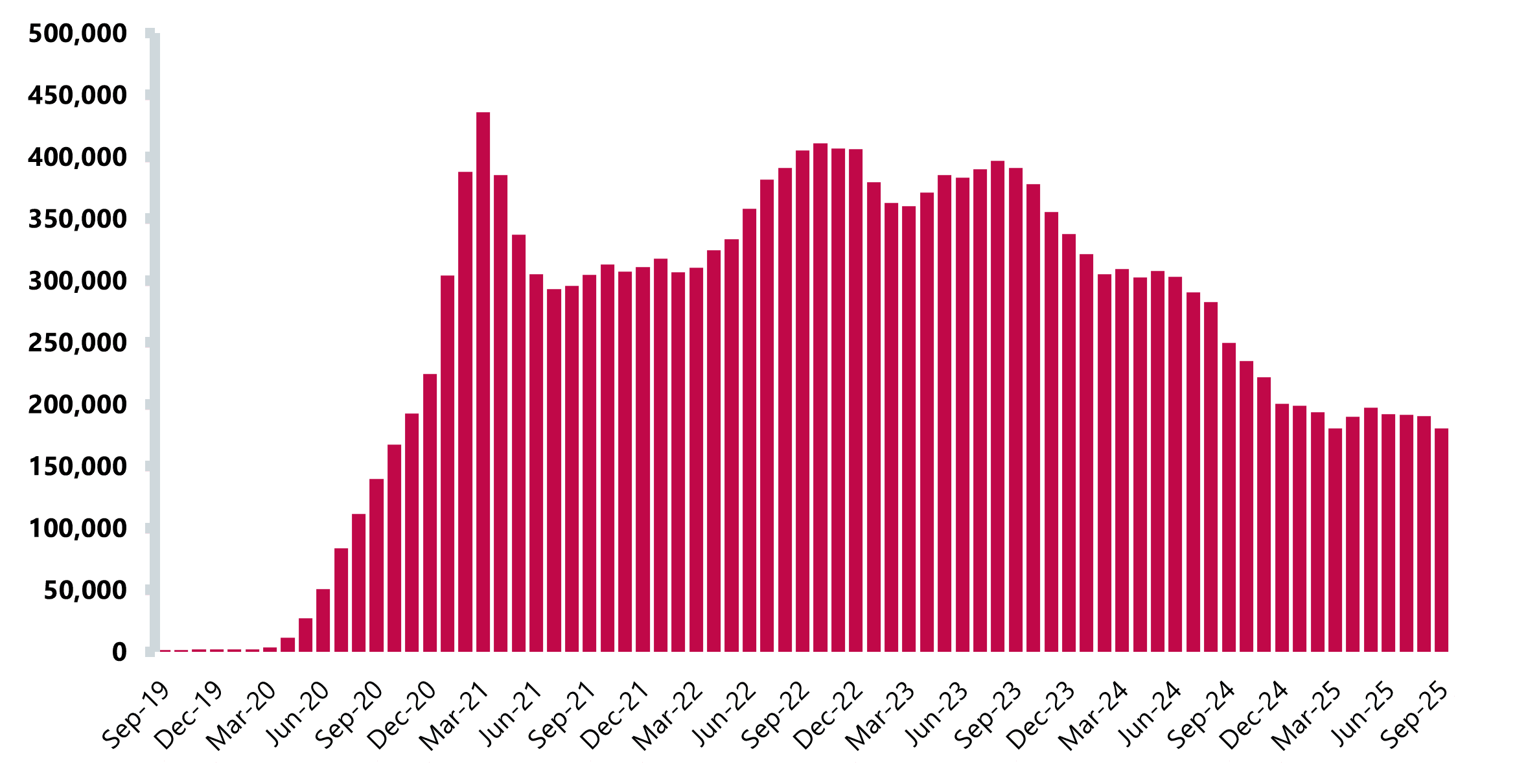
- Waits of over 52 weeks (180,329) are down by over 10,000 since last month and now account for 2.4% of all waits. The planning guidance sets out an aim for waits over a year to account for 1% of all waits by March 2026.
- 1.62 million cases were managed on the waiting list this month, the highest September activity on record. Demand for elective care, measured by new cases added to the list (1.85 million cases) continued to outpace activity.
FIGURE 2
Cases waiting over 52 weeks on the elective care waiting list